
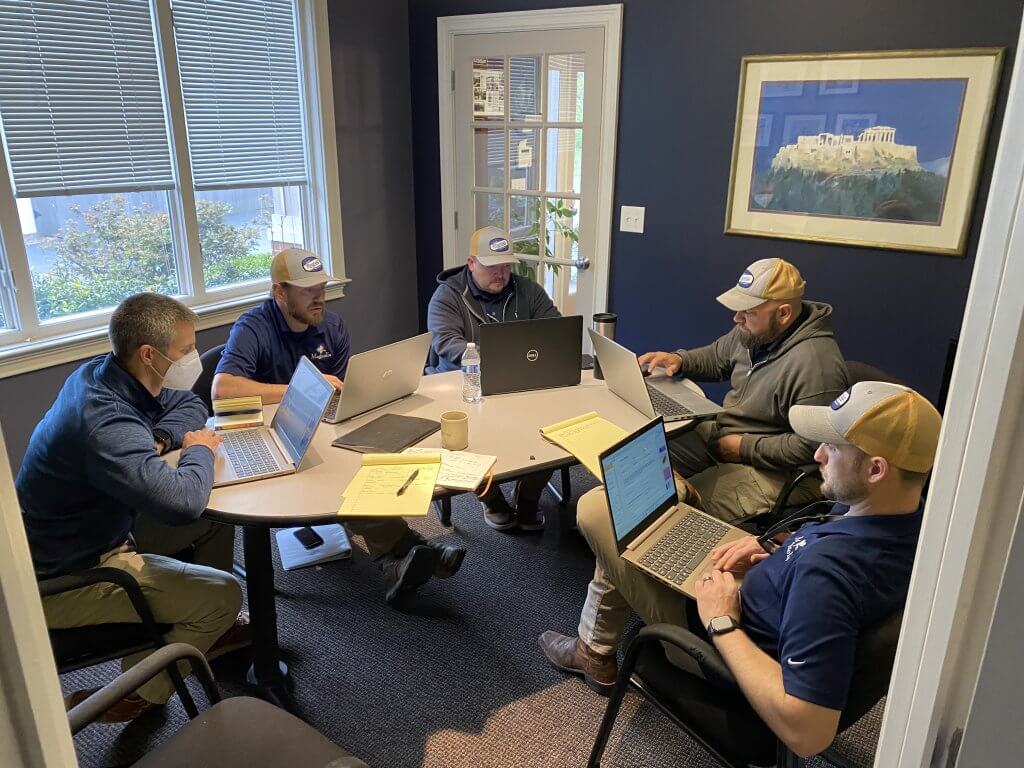

Solo Inspection vs. Team-Based Due Diligence: Why Magnolia Uses a Different Approach

Most home inspections are built around one person.
One inspector arrives at the property. One inspector evaluates the visible systems. One inspector prepares the report. For many straightforward transactions, that model is familiar, efficient, and easy to understand.
But it is not the model Magnolia was built around.
Magnolia’s approach is different because the responsibility is different.
We do not view a home inspection as a checklist appointment. We view it as a residential due diligence process designed to help clients and their advisors understand physical risk before a significant asset decision is finalized.
That distinction matters.
A home is not a collection of isolated parts. It is a system. Structure, drainage, roofing, exterior assemblies, moisture behavior, mechanical performance, electrical distribution, plumbing, site conditions, and installation quality all interact. A concern in one area can influence another. A condition that appears minor in isolation may carry more meaning when viewed in the context of the whole property.
That is where a team-based approach changes the quality of the evaluation.
The Limitation Is Not Effort. It Is Scope.
A skilled solo inspector may work carefully. They may have years of experience. They may be attentive, ethical, and capable.
The limitation is not effort.
The limitation is scope.
One person can only carry so much specialized knowledge into a property. Residential construction has become too complex to assume that one generalist can provide the same depth of perspective across every major system, especially in homes with higher value, age, prior modifications, specialty features, or long-term ownership expectations.
An HVAC system deserves mechanical judgment.
Structural movement deserves structural context.
Drainage concerns deserve an understanding of water behavior and site conditions.
Chimneys, pools, sewer lines, moisture issues, and building envelope details often require focused technical perspective.
A single inspector may recognize that further evaluation is needed. A coordinated team can often bring that perspective into the process earlier, with better sequencing and less uncertainty for the client.
That is the difference.
Magnolia Looks at the Home as a Whole System
Magnolia’s Signature Home Inspection is designed around preparation, investigation, critical thinking, communication, and next-step direction.
The goal is not to overwhelm the client with volume.
The goal is to clarify what matters.
A team-based approach allows Magnolia to evaluate the property from multiple informed angles. When appropriate, this may include professionals with focused experience in HVAC, structural conditions, wood-destroying organisms, chimneys, pools, sewer lines, or other areas the property presents.
This is not coverage for its own sake.
It is protection through informed perspective.
The team approach helps identify patterns across systems. A moisture stain is not just a stain. It may relate to grading, roof drainage, flashing, ventilation, plumbing, or prior repair history. A foundation crack is not just a crack. It may relate to soil conditions, water management, structural movement, or normal material behavior.
The value is in interpretation.
What is happening?
Why does it matter?
What could it mean over time?
What should the client do next?
Those are due diligence questions, not checklist questions.
Team-Based Evaluation Reduces Noise
More people does not automatically mean a better inspection.
Coordination matters.
Without coordination, multiple opinions can create confusion. The client may hear too much, too quickly, without clear prioritization. Realtors may be left managing unnecessary concern or trying to translate technical comments into practical next steps.
Magnolia’s responsibility is to reduce that noise.
The team gathers informed observations, but the process is led with calm authority. The client should not leave the inspection with a scattered list of disconnected concerns. They should leave with a clear understanding of what meaningfully affects value, safety, performance, and long-term ownership.
That clarity is especially important for Realtors.
A Realtor does not need an inspection process that creates drama. They need one that protects the client’s decision, preserves professional relationships, and gives everyone a more reliable basis for next steps.
That is what a coordinated approach is designed to provide.
Why This Matters for Realtors
Realtors carry reputational risk in every referral.
When an agent recommends a due diligence partner, they are not simply giving out a name. They are extending trust. Their client’s experience reflects on their judgment.
A basic inspection may be enough for some clients.
But for clients purchasing homes with complexity, higher financial exposure, or long-term ownership intent, the inspection process should match the seriousness of the decision.
The Realtor’s role is not to diagnose the house.
The Realtor’s role is to help the client choose the right level of advisory support.
A team-based approach gives Realtors a stronger foundation for that conversation. It allows them to say, with professionalism:
“For this type of property, I would recommend a more coordinated due diligence process. The goal is not to create concern. It is to make sure you understand the home clearly before you move forward.”
That language protects the client without alarming them.
It also protects the Realtor’s position as a trusted advisor.
The Difference Is Judgment
A solo inspection often answers the question:
“What did one inspector observe during the appointment?”
Magnolia’s team-based approach is built around a broader question:
“What does this home appear to be telling us, across systems, and what does the client need to understand before making a long-term decision?”
That is a different standard.
It requires more preparation. More coordination. More interpretation. More responsibility.
It also requires restraint.
Magnolia is not trying to make every condition sound serious. We are not trying to produce the longest report. We are not trying to create leverage for its own sake.
Our role is to distinguish normal conditions from meaningful risk.
Some findings require simple maintenance. Some require monitoring. Some require targeted evaluation by a qualified specialist. Some may have financial or performance implications that should be understood before the client proceeds.
The value is not in finding more.
The value is in knowing what matters.
A Better Experience for the Client
A buyer making a significant home decision is often processing a great deal at once.
Contract terms. Financing. Insurance. Appraisal. Repairs. Moving timelines. Family priorities. Emotional pressure.
The inspection should not add unnecessary confusion.
A coordinated team approach allows the client to receive more informed perspective while still being guided through the property with structure. Instead of being left to interpret isolated comments, the client receives context, prioritization, and next-step direction.
That creates a calmer decision environment.
It also helps prevent two common failures.
The first is false reassurance: assuming the home is fine because no one looked deeply enough at the right areas.
The second is unnecessary alarm: treating every imperfection as if it carries the same weight.
Magnolia’s work sits between those extremes.
We clarify.
The Larger Principle
The difference between a solo inspection and Magnolia’s team approach is not simply the number of people involved.
It is the philosophy behind the process.
A solo inspection is often built for efficiency.
Magnolia’s approach is built for residential due diligence.
That means the home is evaluated as an interconnected system. Specialists are involved when the property warrants it. Findings are interpreted through the lens of cause, consequence, and long-term performance. Communication is calm, prioritized, and designed to support a confident decision.
For Realtors, this distinction matters.
Your clients do not need more noise.
They need better clarity.
They need to understand what kind of home they are buying, where meaningful risk may exist, and what steps should be taken before ownership begins.
That is why Magnolia uses a team approach.
Not because every home requires alarm.
Because significant decisions deserve coordinated judgment.