
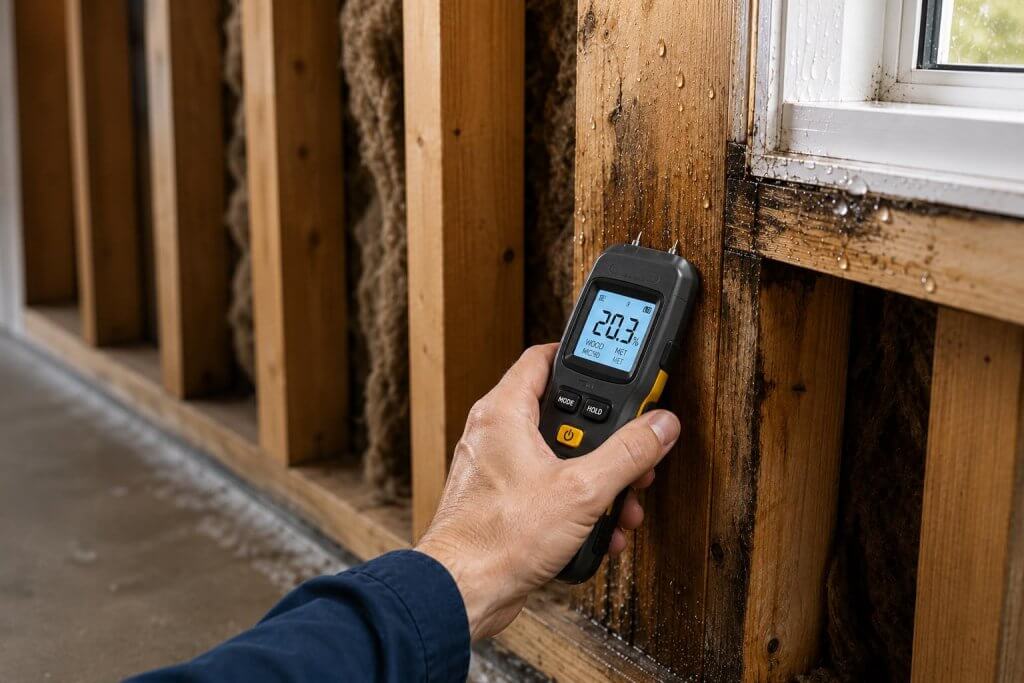

Wood is one of the most durable building materials used in residential construction but only when it remains dry.
Moisture is the single most important factor influencing the long-term health of structural framing. When wood remains damp for extended periods, it creates conditions that allow decay fungi to grow, eventually compromising the material’s strength.
Understanding how moisture affects wood helps homeowners recognize why identifying and correcting water intrusion is so important and why wood moisture readings are a standard part of a home inspection.
Wood Naturally Contains Moisture
Every piece of lumber contains moisture. Even after it has been dried and installed, wood continues to absorb and release moisture as environmental conditions change.
This natural movement is expected and generally does not damage the structure.
Problems begin when wood cannot dry.
Why 20% Moisture Content Matters in a Home Inspection
Building scientists commonly recognize 20% moisture content as an important threshold.
When untreated structural wood remains consistently above approximately 20% moisture content, conditions become favorable for fungi that cause wood decay.
While decay fungi typically become established once wood approaches the fiber saturation point (generally around 28% to 30% moisture content) they can continue growing as long as the wood remains persistently above about 20%.
In other words, it is not a brief exposure to moisture that causes concern. It is prolonged dampness that allows decay to develop over time.

Where Excess Moisture Comes From
Elevated moisture levels often result from conditions that repeatedly introduce water into the home’s structure, including:
- Roof leaks
- Plumbing leaks
- Foundation moisture
- Poor crawl space conditions
- Condensation
- Improper grading or drainage
- Failed flashing around windows and doors
- Inadequate ventilation in moisture-prone areas
Because many of these issues develop gradually, wood may remain wet long before visible damage appears.
What Wood Decay Looks Like
As decay progresses, wood may begin to show signs such as:
- Soft or spongy surfaces
- Dark staining or discoloration
- Cracking or splitting
- Visible fungal growth
- Wood that crumbles easily when probed
- Musty odors associated with prolonged moisture
Not all discoloration indicates structural decay, but persistent moisture should always be evaluated to determine its source.
Preventing Wood Rot
The most effective way to protect structural framing is simple: keep the wood dry.
Good moisture management includes:
- Promptly repairing roof and plumbing leaks
- Managing surface water around the foundation
- Maintaining gutters and downspouts
- Controlling crawl space and basement humidity
- Ensuring proper flashing around exterior openings
- Addressing condensation before it becomes persistent
By correcting the source of moisture early, homeowners can often prevent far more costly structural repairs later.
What Home Inspectors Evaluate for Wood Moisture
During a home inspection, inspectors look for conditions that may indicate elevated moisture or an increased risk of wood deterioration.
This may include:
- Evidence of active water intrusion
- Elevated moisture readings where appropriate
- Visible fungal growth
- Wood deterioration
- Conditions that prevent framing from drying properly
- Structural components that warrant further evaluation
The objective is not simply to identify damaged wood, but to recognize the conditions that may allow deterioration to continue if left uncorrected.
The Bottom Line
Wood decay is rarely caused by a single wet day. Instead, it develops when structural wood remains damp for extended periods.
Maintaining wood moisture below approximately 20% significantly reduces the conditions needed for decay fungi to survive. By identifying and correcting moisture problems early, homeowners can help preserve the strength, durability, and long-term performance of their home’s structure.
Have questions about moisture findings in your inspection report? Contact Magnolia here →
Frequently Asked Questions: Wood Moisture and Home Inspections
What does it mean when a home inspection report shows elevated wood moisture?
Elevated wood moisture in a home inspection report indicates that structural framing or other wood components are retaining more moisture than is considered safe for long-term performance. It does not necessarily mean damage has already occurred but it does mean the source of moisture needs to be identified and corrected before conditions worsen. An inspector will note both the readings and the likely source where visible.
Why is 20% moisture content the threshold in home inspections?
Building science research identifies 20% moisture content as the level above which wood becomes persistently hospitable to decay fungi. While fungi typically become fully established closer to 28-30%, they can survive and grow in wood that stays above 20% for extended periods. This is why inspectors flag readings at or above this threshold even when visible decay is not yet present.
What causes high wood moisture readings in a home?
Common sources include roof leaks, plumbing leaks, foundation moisture, poor crawl space conditions, failed window or door flashing, condensation, and inadequate ventilation. Because many of these develop gradually, elevated moisture readings sometimes appear before any visible damage which is exactly why they are worth catching early.
Can wood recover from elevated moisture levels?
Yes, if the source of moisture is corrected before structural decay has set in. Wood that has absorbed excess moisture but has not yet begun to deteriorate can dry out and return to safe moisture levels once the underlying problem is resolved. The key is identifying and fixing the source promptly. Wood that has already begun to soften, crack, or show fungal growth will typically require repair or replacement.
How does Magnolia evaluate wood moisture during a home inspection?
Magnolia inspectors assess conditions that indicate elevated moisture or increased risk of deterioration including moisture meter readings where appropriate, visible signs of fungal growth or decay, evidence of active water intrusion, and conditions that prevent framing from drying properly. The goal is not just to identify damaged wood, but to recognize the conditions that may allow deterioration to continue. Learn more about Magnolia’s home inspection approach →